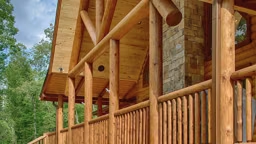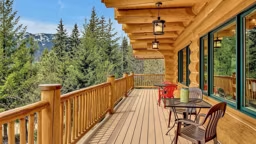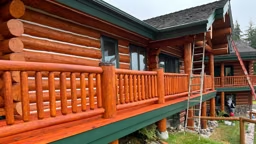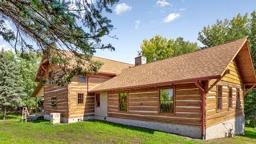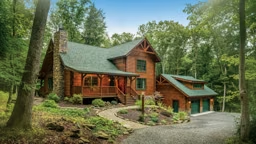
The raw beauty of freshly milled logs, with their organic warmth and graceful grain patterns, appeals to many homeowners. Others are smitten by the silvery patina of aged wood and dream of having this aesthetic for their own log home.
This raises a natural question: can a clear finish preserve the look of bare logs or encourage natural aging while still protecting the structure? While a clear finish has some benefits, it’s rarely the best choice for achieving a consistent, long-term aesthetic.
The Benefits of Clear Finishes
A clear finish can feel like the purest expression of the wood, allowing the natural tone and texture of the wood to remain fully visible. Expectations, however, do not match reality. Log cabins last for decades — sometimes centuries — and over time, a clear finish neither preserves a fresh wood appearance nor is it ideal for natural aging.A clear finish on bare logs has some merit. Perma-Chink’s Lifeline Advance accomplishes two important tasks. It brings enhanced beauty and luster to the wood without changing its appearance, and its breathable film allows moisture to escape while simultaneously preventing water intrusion. Water repelled and existing moisture inside the log is not trapped under the finish. This dual approach to water protection prevents log rot and decay.
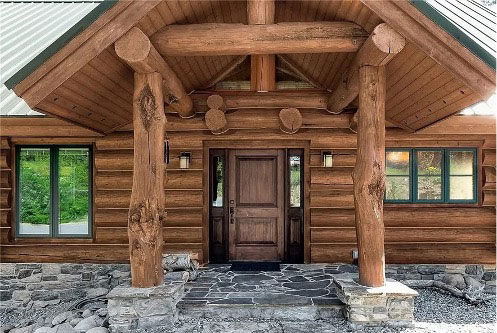
A clear finish also creates a smoother log surface. This trait reduces the amount of dirt, dust and pollen that settle into a log’s natural texture, making routine cleaning easier and more effective.
Where Clear Finishes Fall Short
Sunlight, UV light specifically, is the primary limitation to a clear finish. Over time, UV exposure leads to oxidation and discoloration. For those who want to preserve the look of bare logs, UV exposure is a prime enemy. Lifeline Advance includes a UV inhibitor, which slows the effects of sun exposure, but without a pigment, oxidation is inevitable.But what about those who desire that coveted patina? If exposure to UV light silvers the wood, doesn’t a clear finish make perfect sense?
Because sun exposure varies across a home, the aging process is not uniform. South- and west-facing walls have more exposure to UV light and will age quickly, while shaded areas under eaves or porches can retain their original tone for years. The result is a patchwork of uneven, blotchy, and visually inconsistent colors.
For homeowners envisioning a soft, evenly weathered patina, this can be a disappointing outcome.
The Rare Exception
There is one scenario where a clear finish without a stain makes sense; very old logs that have already undergone full oxidation. In these cases, a borate treatment for insect protection or clear coat can support the preservation of the existing gray patina.A Semi-Transparent Solution
Semi-transparent stains are a high-performance middle ground. Many people associate a log stain with opaque coverage. That’s because repeated application of a stain will indeed eventually cover the wood and hide a log’s natural beauty. These stains are more like paint.A semi-transparent stain, like those formulated by Perma-Chink Systems, contain just enough pigmentation to shield the logs against UV damage but allow the log’s grain and personality to remain visible.
For a bare log look, choose a Lifeline Exterior stain color that mimics your logs’ natural color. Lifeline Exterior offers 10 hues including a dark natural, walnut, driftwood or even a redwood’s distinct cinnamon tint. We also have stain colors to replicate the soft, muted tones of naturally silvered wood.
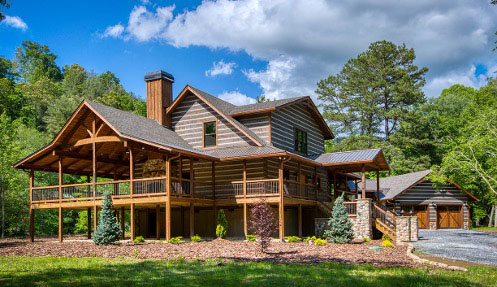
These semi-transparent stains deliver a consistent aesthetic from day one, while still providing protection against both moisture and UV exposure. Add a UV boost to the stain for additional protection. Now the clear top coat finish is protecting the stain while enhancing the beauty of the logs with additional depth and luster. It’s the best of everything.
Follow along! Join Perma-Chink Systems, Inc. in this exclusive Ask the Expert series to get answers to all your top questions about staining, sealing, maintenance and more!
Sponsored by Perma-Chink Systems, Inc.