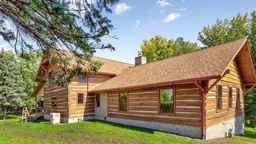
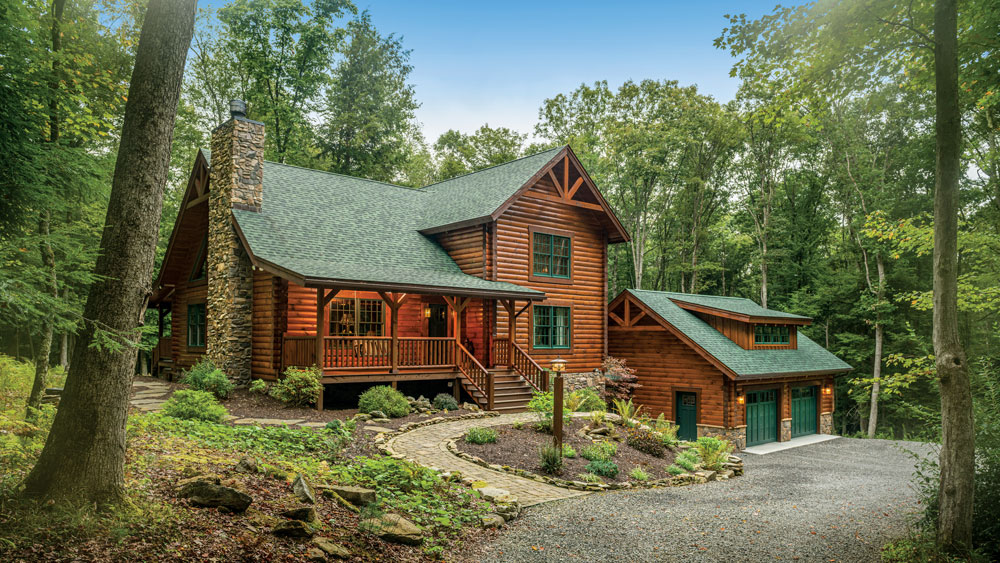
Photo courtesy of Appalachian Log Structures; See more of this home here
To protect log homes, a range of products, including stains and sealants, perform different functions. Your log provider or builder will recommend options that will work well with your wood species and region, but you should understand what they plan to use and how it will be applied. Here are a few of the most common:
Caulk
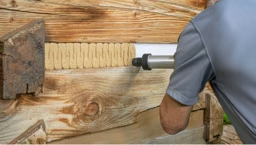
A sealant used to fill joints and spaces between logs. Often, it’s clear or a color that matches the tone of the wood, making the caulk virtually invisible. Caulk comes in tubes or pails and is applied with a gun in a narrow bead. The soft, moist bead dries to a tough elastic barrier that protects the interior from air and water penetration.
Gasket Tape
A pressure-sensitive PVC foam with adhesive on one side. It provides a high performance seal against dust, light, air and moisture.
Chinking
One of the most recognizable log home features, chinking is a thick material used to seal the gaps between log courses. Traditional chinking was mortar-based, but modern synthetic chinking is far more elastic and durable. It’s available in a variety of colors, though most homeowners prefer white or a light color to contrast with the logs or choose a shade that matches the wood tone to make the chinking visually disappear.
Preservative
A mix of chemicals designed to provide a barrier against a host of environmental threats, such as mold, mildew, UV rays and insects.
Stain
There are three types of stain: oil-based, water-based and emulsions that blend the two. Each has its advantages. Water-based stains are easy for a DIYer to apply and applicators clean up with soap and water in a snap, but the stain sits in the very top layers of the wood fibers.
Oil-based stains penetrate deeply into the wood and, as a result, many people believe offer a richer, deeper tone. However, oil-based stains are less forgiving during application and require a little finesse – typically best left to the pros. Clean-up is also trickier, as most oil stains require a special solvent to remove it. And, since it does soak deep into the wood, if you want to change the color, it will take a little extra stripping and sanding to reach bare wood.
Today’s stains are designed not only to tint or accentuate the grain of your log walls (stains come in a host of colors from driftwood gray to mocha brown), but also to coat the wood with a breathable layer of protection. Even if you want to keep your logs their natural color, a coating with a very slight pigment will protect the wood from sun and moisture damage.
TIP: Always use a stain specifically formulated for log homes. Deck or furniture-grade stain from a big-box store is not the same.