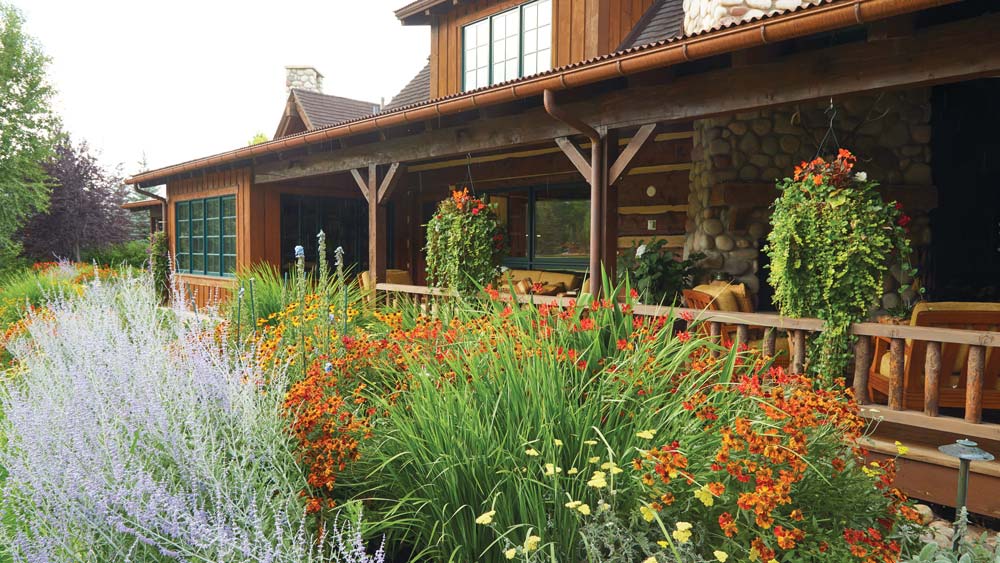
Photo by Jack Coyier; Garden design by Tera’s Gardens
For farmers, midsummer has an ominous nickname: the Heart of Darkness. It’s the season when the heat is at full boil, the threat of drought is all too real and the list of farm-related tasks seems longer than a grocery receipt. But it’s not just farmers who can feel weary at this time of year. Whether you live in the mountains, desert, lowlands or prairie, maintaining a lush landscape can be daunting when it seems like there’s so much to handle and the heat and humidity are sapping your motivation to get it all done.
However a bit of planning can keep your stamina going strong without losing any plants along the way. Consider these tips for enjoying your log or timber home landscape — even in the hottest months.
- Go native: As much as possible, choose native plant species. Native plants, particularly grasses and wildflowers, will tolerate local conditions ranging from drought to flooding. Not sure what those are for your area? Talk to experts at a local nursery (as opposed to big-box chain stores that may have mostly non-native options) about the specifics of a particular region. Native plants tend to thrive on natural rainfall even when that’s scarce, so you won’t need as much supplemental watering.
- Think smaller: There’s a reason you see shrubs and naturally small trees thrive in warmer months: Their small stature makes them hardy, often requiring sporadic trimming, and many are drought resistant. Varieties to consider will hinge on your area, but some dependable options are Russian sage, juniper, bayberry, lilac and hydrangea.
- Mulch generously, even for edibles: Woodchips, bark, straw or other organic options will significantly boost your soil’s moisture retention, keeping plant roots cool during periods of extreme heat. Plus, mulch will suppress weeds, thwart erosion and improve soil health as the material breaks down over time.
- Be smarter about grass: Mowing the lawn can drain anyone’s energy, particularly if you have to do it often. Because of that, consider replacing part or even all of your lawn with grass that doesn’t grow tall — meaning it may need to be mowed only a few times in the season. The best pick is fescue, which comes in mixes of different varieties and has a slow-growing short pile that’s great for shady spots as well as full sun and is drought tolerant.
- Add more perennials: While colorful, showy annuals can be stunning, they do need to be replanted each year, which can significantly increase your gardening workload. Plus, many annuals are fussy when it comes to watering and sun exposure, so you may not even have them for a full season. Consider drought-tolerant perennials that are appropriate for a wide range of zones and can tolerate full sun. Some excellent picks are yarrow, echinacea, lavender, black-eyed Susan and catmint.
- Get a little wild: Unless you enjoy a very formal look to your landscape, incorporate some wild areas that mix native grasses and flowers without any weeding required. A big plus here? They’re ideal for pollinators like butterflies and bees, and they tend to be highly drought resistant.
- Expand hardscape: Even with no-maintenance plants, having less green space means even less work. As an added advantage, you’ll have more room for outdoor entertaining. Consider spots that already have shade, so you can kick back in the swelter of the summer.
As with other aspects of landscape care, it’s helpful to keep a dedicated journal you can reference from one year to the next. Even if you think you’ll remember when you planted certain trees or added mulch around your garden areas, jotting it down and then recording the results can make you a more efficient gardener. You may even avoid the Heart of Darkness completely and save your energy for enjoying your landscape instead of working on it.